Best Practices for Implementing a Decision Support System, From Planning to Adoption
Why most DSS projects fail and how yours can win
Many teams buy smart tools then watch them gather dust. The tech is rarely the core issue. Fit, trust and clear value decide success. Below are proven moves that keep a decision support system (DSS) alive after go‑live.
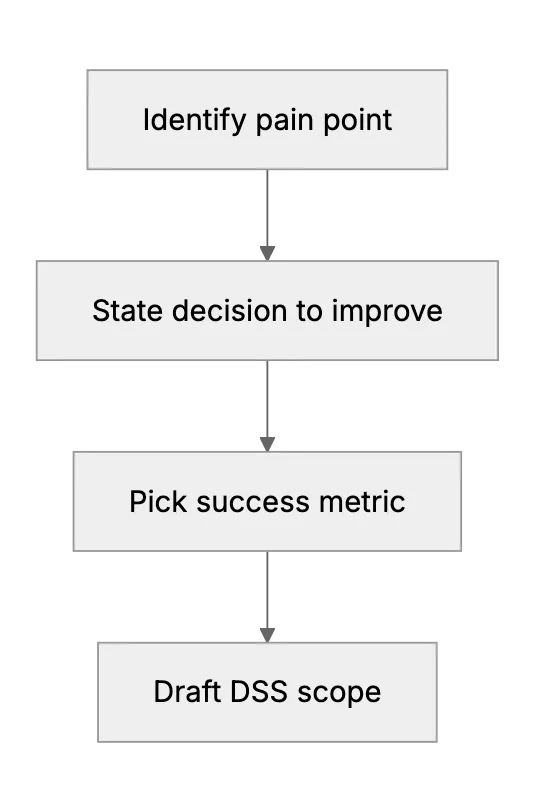
1. Run a tight needs assessment
List the real questions the business must answer and map each question to a metric. Skip any feature that does not serve a listed metric. This prevents "solution looking for a problem."
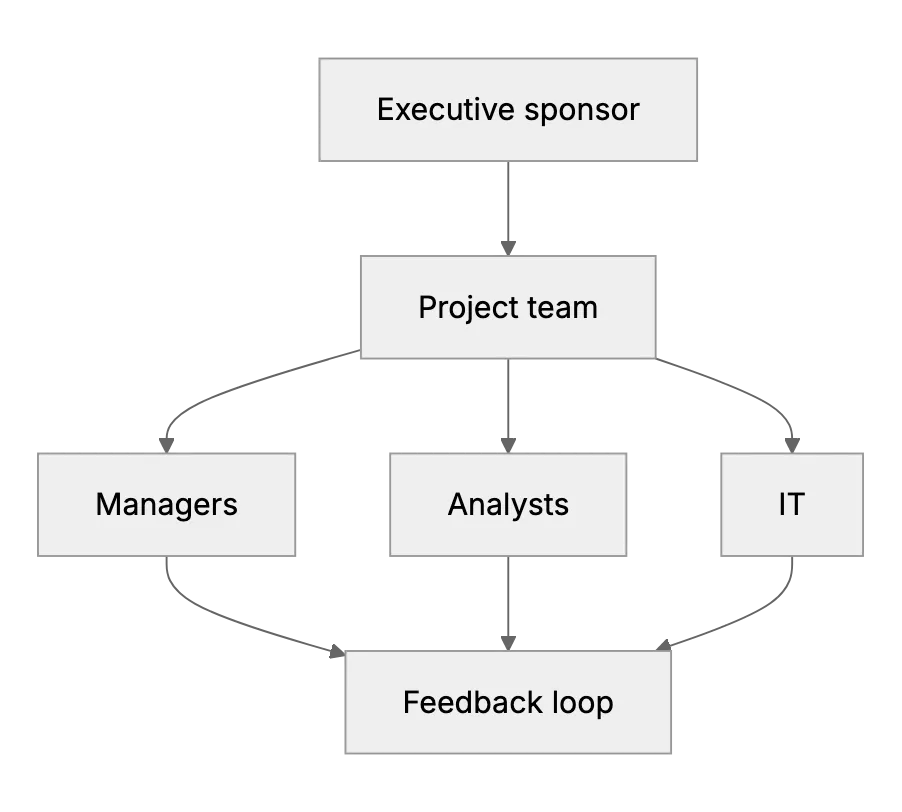
2. Secure early stakeholder support
Create a core group of users and an executive sponsor. One survey shows 77% of teams call leadership backing the top success factor in system rollouts.
3. Clean and connect the data first
Users stop trusting dashboards after one bad number. Inspect sources, set quality rules, document lineage. Automate checks before data reaches models.
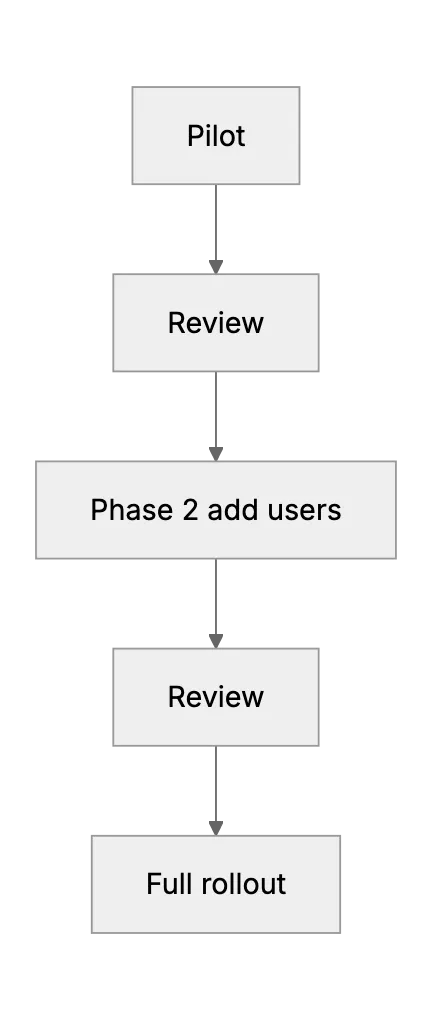
4. Go phased, not big‑bang
Start with a pilot that answers one high‑value question for one group. Show a quick win. Only 21% of firms still choose a big‑bang approach.
5. Train, integrate, reinforce
Walk users through live scenarios, not slide decks. Embed DSS steps inside current workflow screens. Tie KPIs and bonuses to usage when possible.
6. Build transparency and validation
Explain why each recommendation appears. A LinkedIn post on CPG analytics warns that changes felt "like pulling teeth" when people did not see the logic behind the tool. Run the DSS in shadow mode first to compare its advice to human choices and fine‑tune rules.
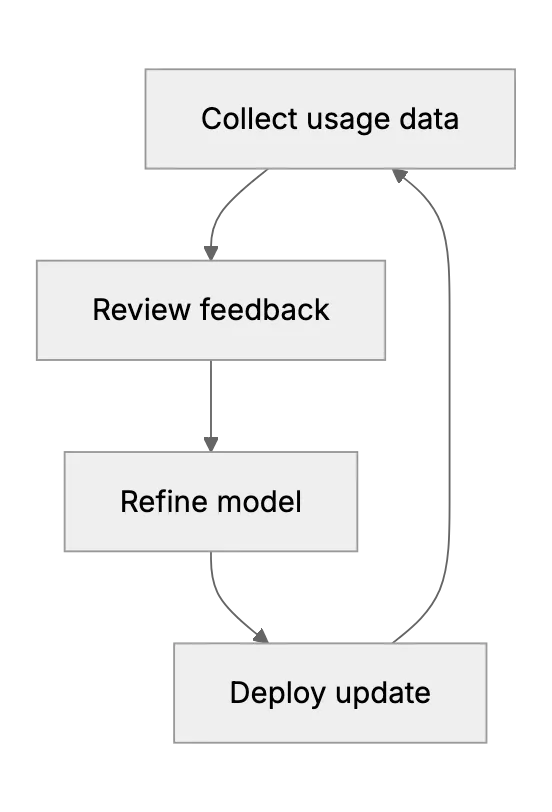
7. Plan continuous improvement
Set a monthly loop: collect feedback, adjust thresholds, add data, update models.
Common pitfalls and quick fixes
- Late user involvement. Bring them in at prototype stage.
- Chasing perfect data. Start with "good enough," improve incrementally.
- No change plan. Pair launch with clear training and follow‑up.
- Over‑engineering reports. Focus on a few key numbers that guide action.
- Ignoring maintenance budget. Reserve time and funds for monthly tweaks.
DSS setup checklist
- Define business questions and KPIs.
- Assign executive sponsor.
- Form cross‑functional team.
- Audit data sources and fix quality gaps.
- Deliver a narrow pilot in 90 days.
- Create role‑specific training paths.
- Publish adoption and ROI metrics every quarter.
Frequently asked questions
1. How long should a DSS pilot run?
Four to twelve weeks works for most teams. That is enough time to gather usage and impact data.
2. Who owns data quality after launch?
The business owner of each source system, with support from data engineering.
3. How do we measure DSS ROI?
Compare pre‑ and post‑launch KPIs such as margin lift, reduced decision cycle time and error rate.
4. What if users still ignore the tool?
Embed its outputs in mandatory forms or tie compliance to performance reviews.
5. How often should models be retrained?
At least quarterly, or sooner if input data drifts.
6. Is cloud or on‑prem better for DSS?
Cloud speeds spin‑up and scale. On‑prem may suit strict data‑sovereignty rules.
7. What skills must the core team have?
Domain lead, data engineer, analyst, UX designer and change manager.
Related Articles
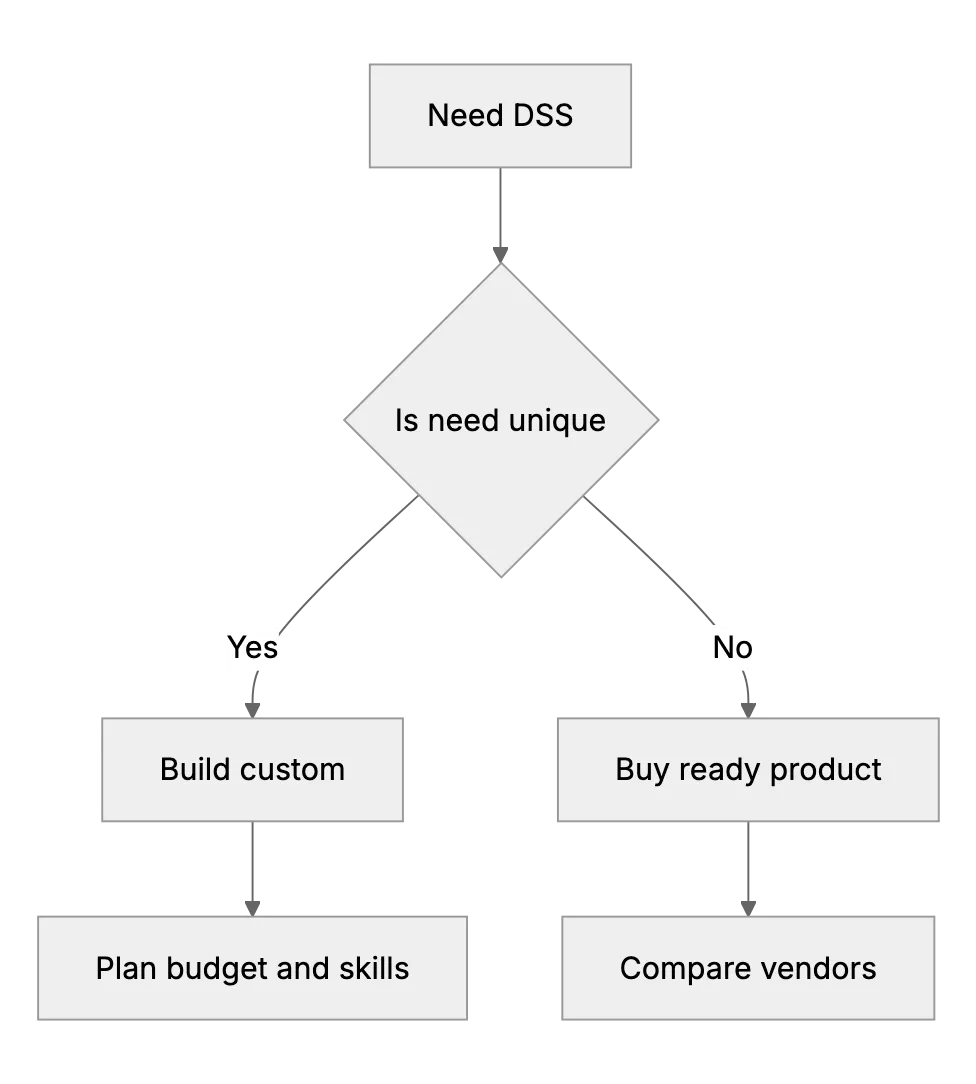
Choosing the Right DSS Solution. Build vs Buy and Key Evaluation Criteria
Should you build a custom decision support system or buy an off‑the‑shelf platform? This guide lists the pros and cons, cost factors, and a clear checklist to help you pick the best path.
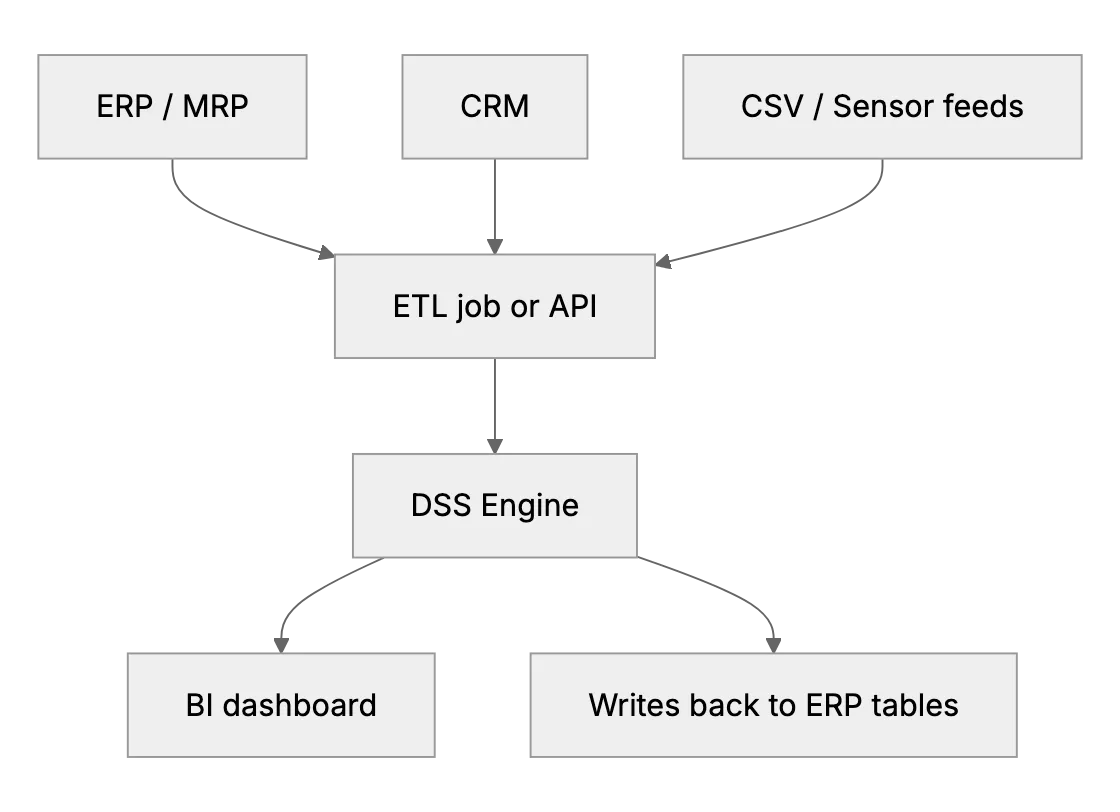
Integrating a DSS into Your Existing Workflow: Data, Tools & People
Practical guide to connect a Decision Support System with your current software stack and daily routines without disruption.
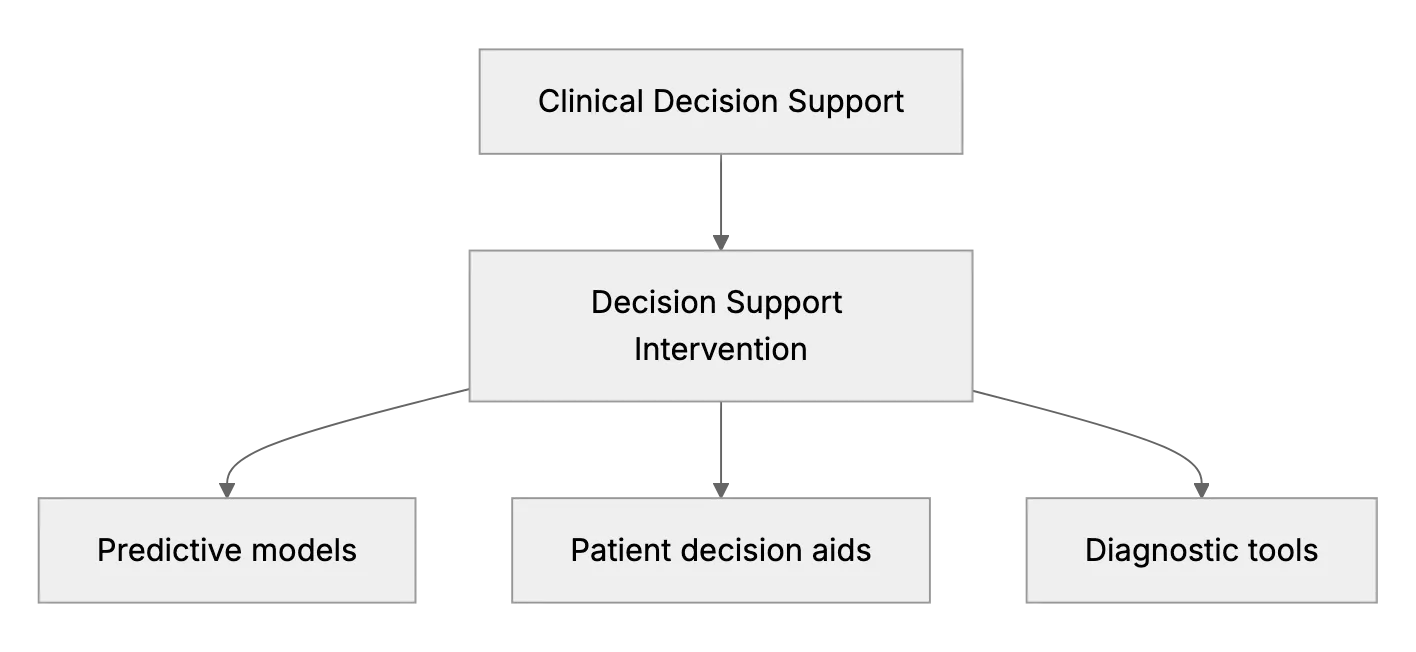
What is a Decision Support Intervention (DSI)?, Expanding the Decision Support Toolkit
Learn what a Decision Support Intervention (DSI) is, how it builds on Clinical Decision Support, and why new rules demand algorithm transparency.