Refund Request Dilemmas: Enforcing Your Policy Without Losing the Customer
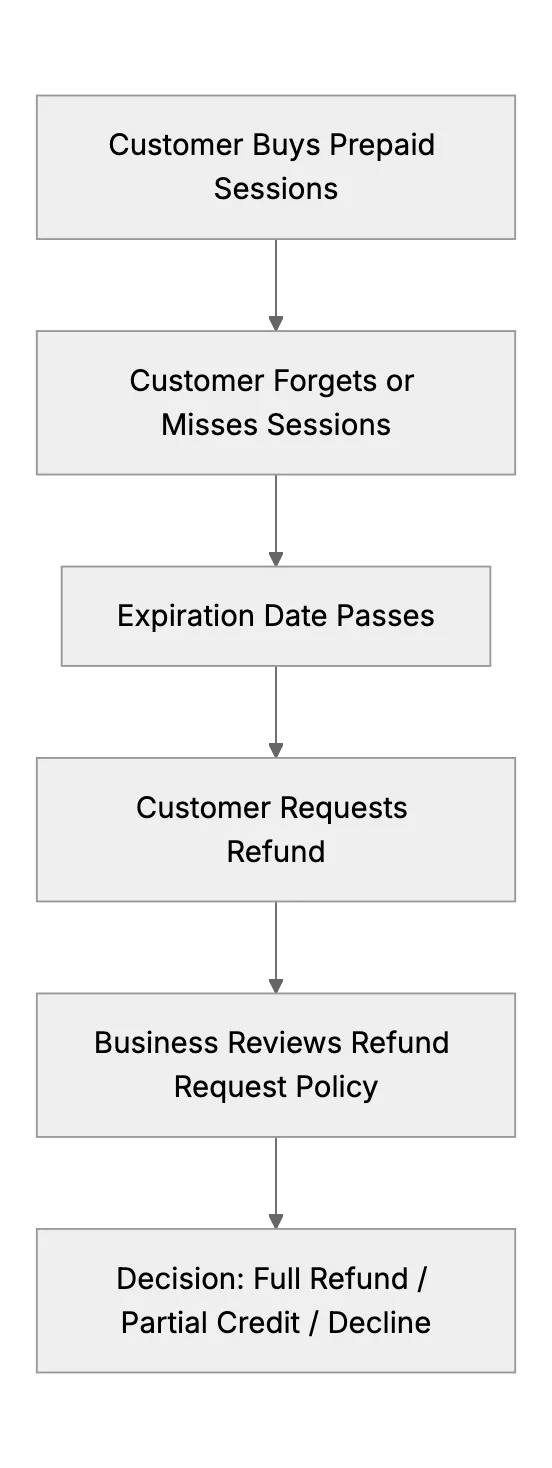
Small businesses often juggle multiple tasks. Someone always ends up asking for a policy exception. A classic example is a client who bought a bundle of sessions or services, then missed them all without a valid reason. After the expiration, they ask for a refund. You offered a partial credit. They still want more. Is that fair? It's tough. A refund request policy is important. It guides customer conflict resolution, ensures consistency, and protects revenue streams.
Let’s break it down. Customers might be upset or feel entitled to a refund. They might not remember or might claim they never saw your small business policies. Yet you did everything right. This article explores best practices for enforcing policy while keeping goodwill with customers. We'll mention referencing terms gently. We'll see when partial credit offering can help. We'll discuss a compromise approach for compensation requests. Plus, we'll look at policy exceptions and how to handle them without damaging the relationship.
Enforcing your policy isn't about being stubborn. It's about having structure. You do not want to lose the customer in the process. But you also want to maintain fairness. Even though the business isn't at fault, you might want to offer a little compromise approach. A partial credit can help smooth over tension. Doing this might boost goodwill with customers, and you’re still referencing terms gently. You’re showing you respect their feelings but must stick to best practices for enforcing policy.
Why Documented Policies Matter
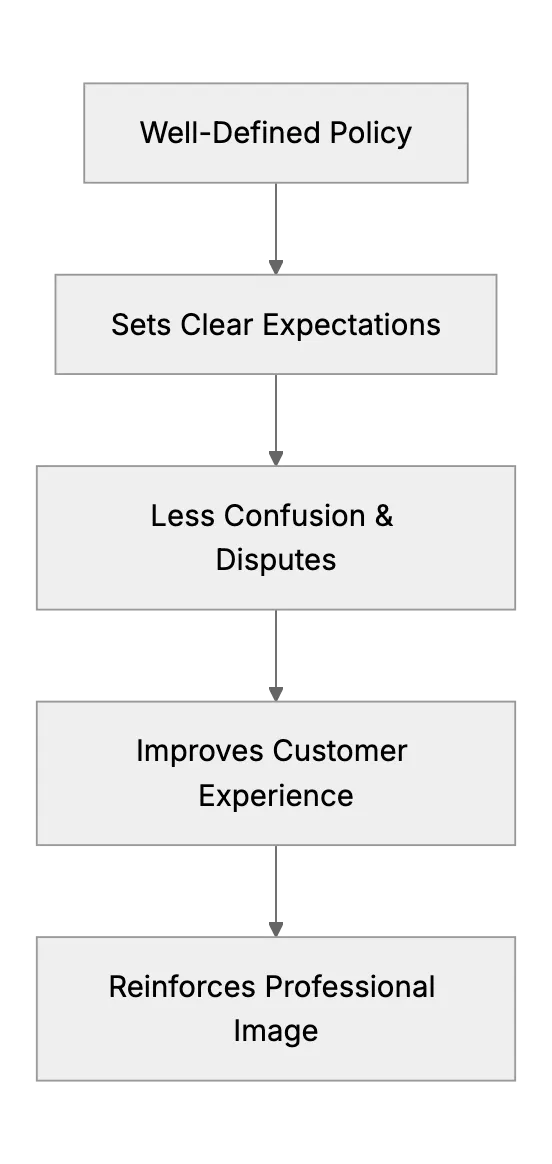
Having clearly written small business policies reduces confusion. Customers know when sessions expire or how refunds apply. Reminders are great, but people forget. Written disclaimers in your refund request policy keep things consistent. Then you can point to them. This fosters transparency. It sets customer expectations at sign-up. It also supports a strong approach to customer conflict resolution by giving you a baseline for compensation requests. If you skip a formal policy, you risk inconsistent handling of disputes. That leads to bigger problems and negative reviews.
Offering Partial Credit or Refund: Which is Right?
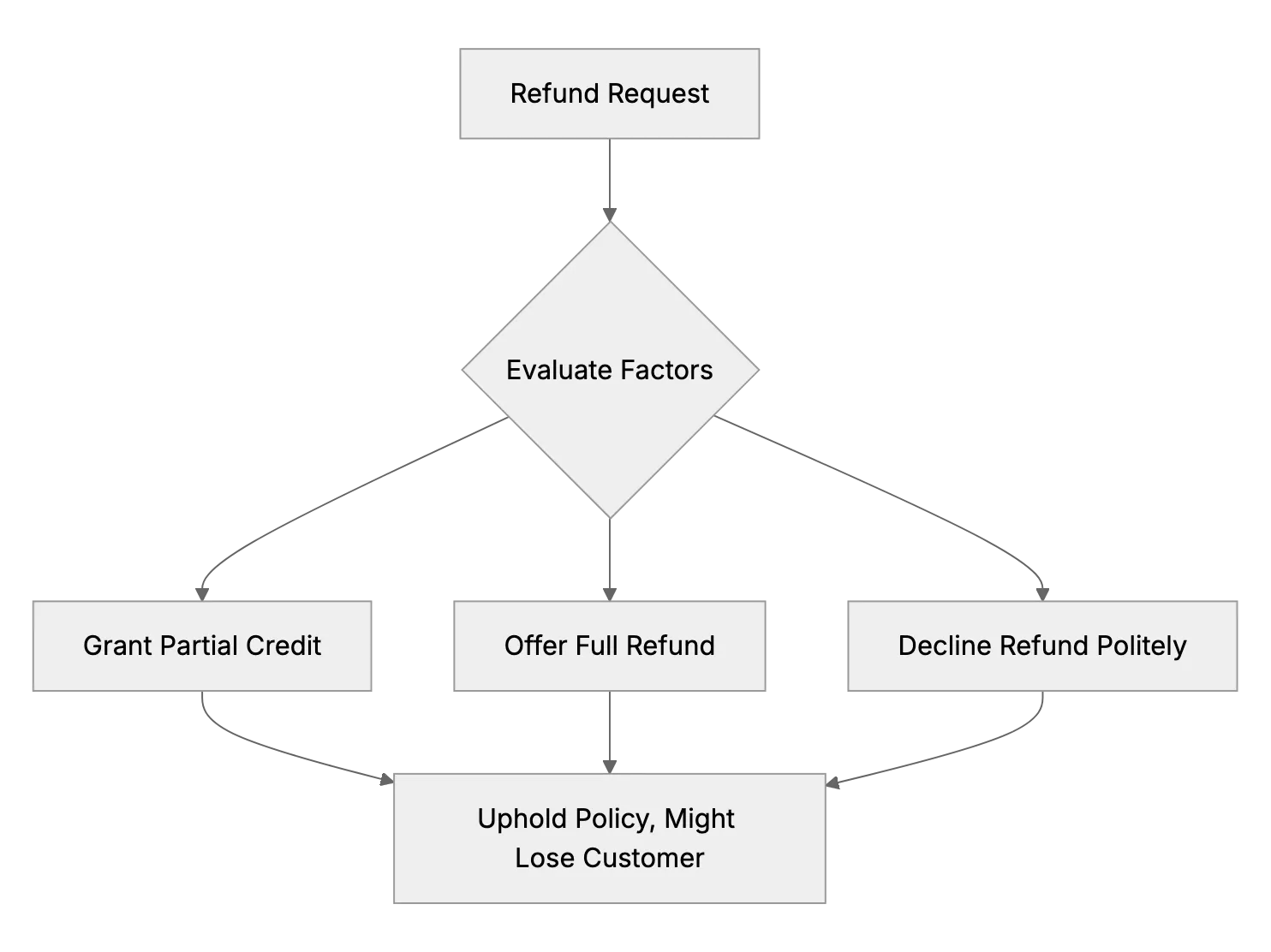
Sometimes a full refund is too much. You did all you promised. The client was the one who didn't show up. Yet you still want them back. Enter partial credit offering. It's a middle ground. You preserve your revenue. You also give them something to use later. This approach helps you keep them engaged for future services. It’s a goodwill gesture. Policy exceptions can happen, but do so sparingly. You don't want to undermine the written policy entirely.
Decision factors:
- Duration since expiration: If it's only a few days past, maybe be more flexible.
- Customer loyalty: If they've been loyal, partial credit might be worth it.
- Nature of missed service: If your resources or staff time were already blocked, you lost that slot. A partial refund might be the limit.
- Long-term relationship: Will a small concession boost future business or references?
These considerations create a compromise approach. It's often a best practice for enforcing policy but still showing compassion. Balance is key.
Referencing Policy Without Alienating the Customer
Politeness matters. You can highlight terms in an email or phone call. Make the tone calm. The goal is clarity, not accusation. Example: "We appreciate your support. According to our published terms, these sessions expire after 90 days. We understand that life happens. Because we value your business, we’re happy to extend a partial credit for future use." This is referencing terms gently. No hostility. No blame. There's a balance between upholding small business policies and letting them feel heard.
Documentation is needed. People know you manage data properly. You’re consistent and professional.
When to Make Exceptions
Policy exceptions might be needed if you find special circumstances. Maybe the customer had an emergency. Maybe they never got your reminders due to an email glitch. A small business wanting to maintain goodwill with customers might bend the rules. It's a business decision. Some companies adopt a flexible approach, offering an extension or partial credit. Others stand firm. Either way, you want consistency. If you frequently make exceptions, your policy loses impact. Evaluate each case carefully.
Maintaining Goodwill and Future Relationships
Though your business isn't at fault, a creative compromise approach can keep the relationship alive. People appreciate fairness and empathy. Refund request policy guidelines are your foundation. Gently referencing terms can do marvels. They see you’re not pulling rules from nowhere. Then, offering partial credit or an extension is icing on the cake. You can lose some revenue or resources in the short term. But you might gain word-of-mouth praise. It's a balancing act in customer conflict resolution.
Another important piece is communication. Make it personal. Thank them for their prior patronage. Show genuine concern for their frustration. This helps them see you’re not dismissive.
Steps to Manage a Dispute Like This
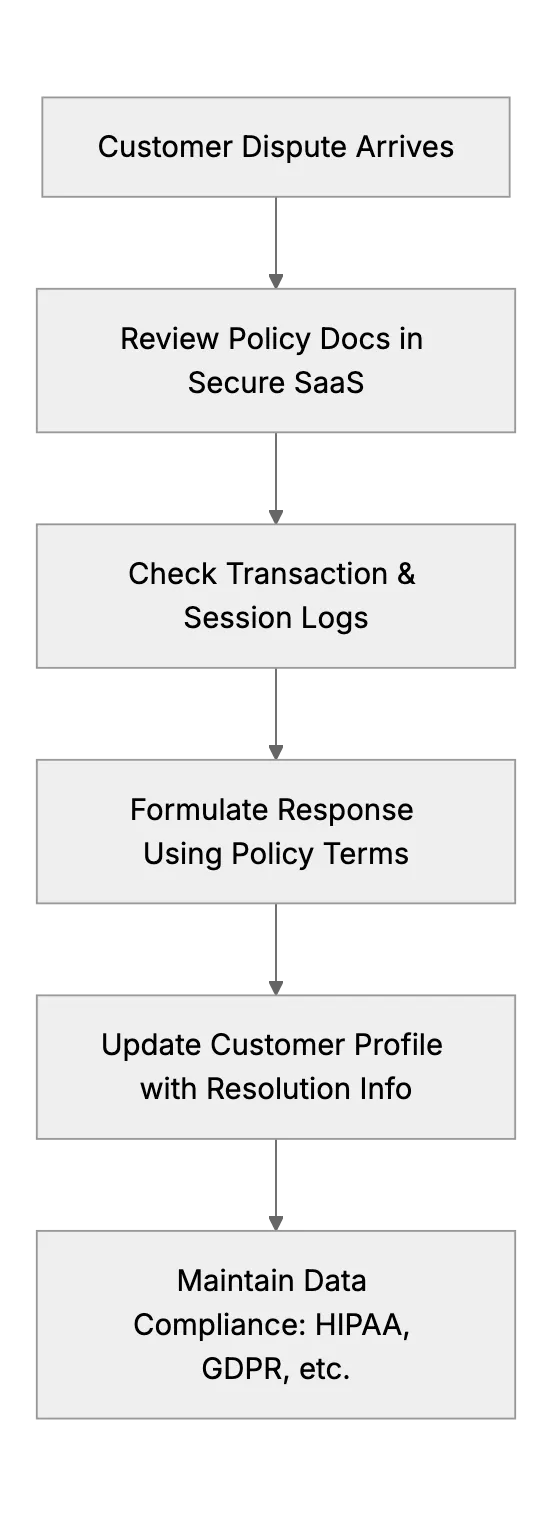
It's good to have a standard process so that you handle all compensation requests in a systematic way.
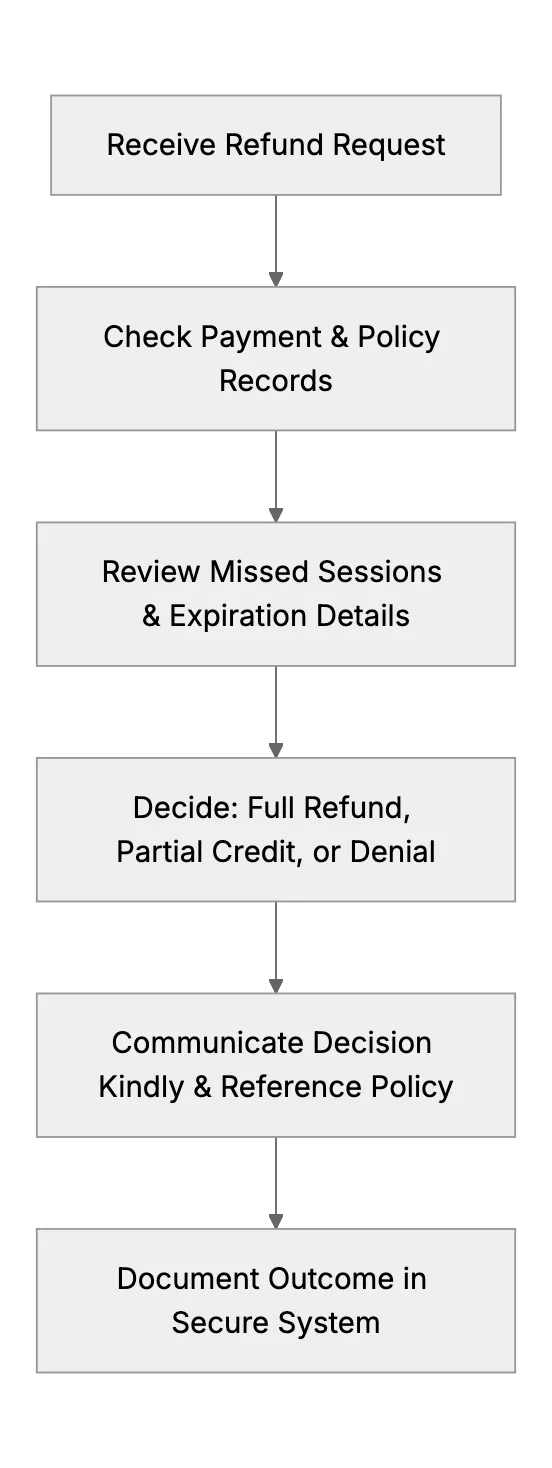
Every scenario is unique. There's no perfect formula. Small businesses must weigh fairness, potential future revenue, and the principle of sticking to best practices for enforcing policy. A strong approach ensures your brand remains credible while you handle tough cases. You want customers to trust you with data and with disputes.
To sum up, you must set and follow your refund request policy. Reference terms gently. Make an occasional partial credit offering if it matches with your brand and revenue goals. Remain consistent in your approach. Offer compromise when it makes sense. Most importantly, preserve that customer relationship while safeguarding your business. This is how you manage real-life dilemmas without losing your mind or your money.