
Outsourcing Customer Service, Pros, Cons, and Tips for Small Businesses
Many small businesses consider outsourcing customer service. They want to reduce overhead and tap into specialized expertise. Some see potential to slash costs and channel savings into growth. Others worry about losing control of quality. Here's a balanced look at what to expect if you're thinking about outsourcing support.
Outsourcing can be an attractive option. Lower labor costs in certain regions. Access to 24/7 coverage. Scalability that's hard to achieve with a small in-house crew. But you'll need to make sure smooth communication between your outsourced team and your core ops.
Pros of Outsourcing Customer Service
Cost savings is often top-of-mind. Many outsource providers offer tiered pricing, letting you scale support as you grow. This can be cheaper than hiring full-time staff. You also skip overhead costs, like office space or additional equipment.
Global coverage is another advantage. Time zones can be leveraged to offer non-stop service. That's a major step up if you have customers around the world. Also, call centers or support agencies often invest heavily in their training programs. They can provide structured, uniform customer exchanges.

Cons of Outsourcing Customer Service
Lack of direct oversight is a concern. You might find it harder to shape agent messaging or respond quickly if there's an unexpected brand issue. The external team may not share the same sense of ownership as your employees. Another risk: sensitive customer data must pass between multiple parties. If you handle regulated information, be sure systems and agents follow proper protocols.
Language barriers and cultural differences might also appear. Even with top-notch English speakers, subtle nuances can get lost. This can impact quality or lead to frustration on the customer's end. And there's always the possibility that an outsourced team handles multiple client accounts, so response times or focus could vary.

Balancing Outsourcing with In-House Support
Some small businesses pursue a hybrid model. They keep key roles in-house, like escalations or complex tech support, and outsource routine tasks. This approach can reduce pressure on your internal team. It also frees you to handle sensitive or high-value exchanges directly.

Key Considerations for Small Businesses
Before you jump in, evaluate a few points:
- Cost vs. Quality: Calculate the real cost. Check if the drop in overhead matches with your standards for customer satisfaction.
- Cultural Fit: Gauge if your outsourced provider understands your brand voice.
- Communication Channels: Decide how you'll share feedback, gather data for improvements, and maintain transparency with your outsourced team.
Practical Tips for Outsourcing Success
Look for providers with a track record in your industry. Ask about their training processes and security practices. Also plan how you'll measure performance (e.g., response times, resolution rates, CSAT scores). Good metrics keep everyone aligned.
Related Articles
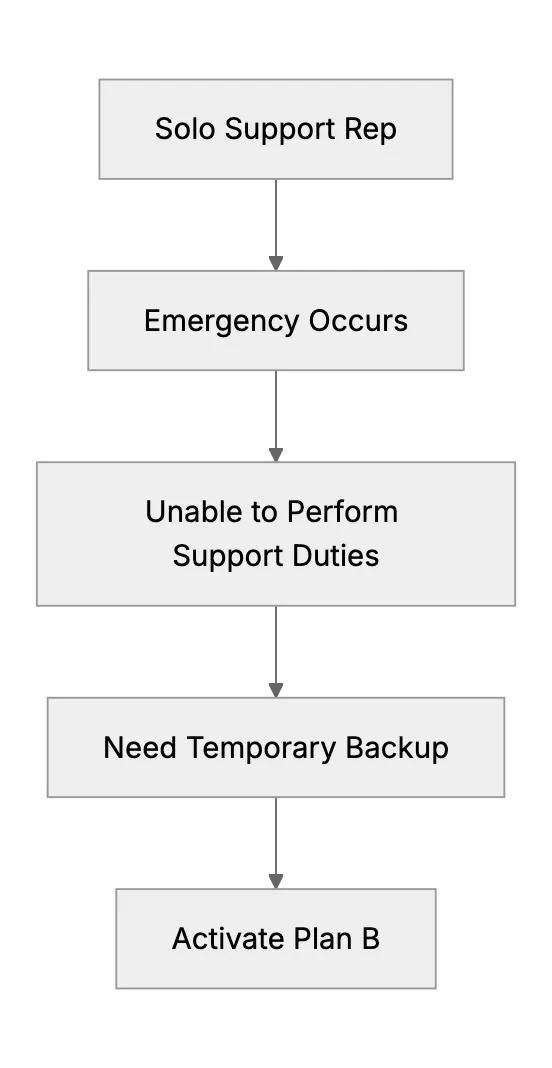
What Happens When the Only Support Person Is Sick? (Emergency Backup Plans)
Preparing a backup plan for a one-person support team during unexpected illness or personal emergency.

Personalized Customer Experience: How AI Systems Remember Preferences
Small businesses use AI to remember customer preferences and tailor service

HR Policies and Manuals
HR Policies and Manuals